
 by
by 
Key Takeaways
- International travel is more risky in 2026. Presidential Proclamation 10998, country-based entry restrictions, visa issuance delays, and additional screening procedures can affect your ability to return to the United States, even if you have valid immigration documents.
- A valid visa does not guarantee re-entry. Customs and Border Protection officers decide whether a traveler will be admitted at a U.S. port of entry and may refer travelers to secondary inspection for additional review.
- Student, visitor, exchange visitor, and employment-based visa holders face different concerns. Your visa classification, travel history, immigration history, nationality, and documentation can all affect re-entry after an international trip.
- Adjustment of Status applicants should use extra caution when traveling abroad. Leaving the United States without the required travel authorization may jeopardize a pending green card application and create additional immigration problems.
- Advance Parole allows eligible applicants to travel, but it does not guarantee admission. Travelers with Advance Parole may still face questioning, delays, and inspection upon return to the United States.
- Review your immigration records before booking a flight. Confirm that your travel documents remain valid, check for current entry restrictions, and speak with an immigration attorney if you have a pending application, prior immigration issues, or concerns about re-entry.
Your sister is getting married overseas. A parent living abroad becomes ill. You need to travel, but given the current political climate, you’re not sure about the potential risk. As a nonimmigrant visa holder, can you leave the United States and return without problems?
It’s a hard situation without easy answers. New travel restrictions, expanded screening procedures, and Presidential Proclamation 10998 have created uncertainty for many travelers. If you hold a nonimmigrant visa (e.g. an F-1 student visa or H-1B work visa) or your green card application is pending, leaving the country at the wrong time or without the right travel authorization can create immigration problems.
Many people believe that a valid visa guarantees re-entry into the United States. It doesn’t. So before you book an international flight from Seattle-Tacoma International Airport or make plans to travel abroad, you’ll want to know how current restrictions may affect your immigration status and your ability to return.
What Current Restrictions Mean for International Travel
In June 2025, Presidential Proclamation 10998 imposed entry restrictions on foreign nationals from designated countries. The proclamation created full suspensions for some countries and partial limitations for others. For example, some people may encounter barriers when applying for a visa abroad. Others may face further government scrutiny before receiving travel authorization or returning to the United States.
Presidential Proclamation 10998: What You Need to Know
Presidential Proclamation 10998 continues to affect international travel. The proclamation followed a federal review of security screening procedures and information-sharing practices involving designated countries. As a result, certain foreign nationals now face limitations that can affect visa eligibility and admission into the United States. Before making travel plans, confirm how current restrictions apply to your immigration status.
Visa Issuance Delays and Government Review
Getting a visa stamp abroad may now take longer than expected. During a visa interview, a consular officer may request further documentation from you or recommend that your application receive further government review. When that happens, you and other visa applicants may have to remain outside the United States until a decision is issued.
The government review period varies. Some applications are resolved quickly, while others remain pending for extended periods. If your employment, education, or pending immigration application depends on returning to the United States by a certain date, a delay abroad can create major problems.
Inspection at the Port of Entry
United States Customs and Border Protection officers inspect all travelers arriving at airports, land borders, and seaports. Those officers determine whether an individual will be admitted into the country.
In some situations, you may be referred to secondary inspection for further review. If this happens, immigration officers may examine your immigration records, travel history, supporting documents, and information related to the purpose of the trip, delaying your admission or potentially resulting in a denial.
Note: Holding a visa allows you to travel to a U.S. port of entry and request admission. It doesn’t guarantee that you’ll be admitted. Before leaving the country, understand that re-entry may involve questions and closer review, even when your documents appear valid.
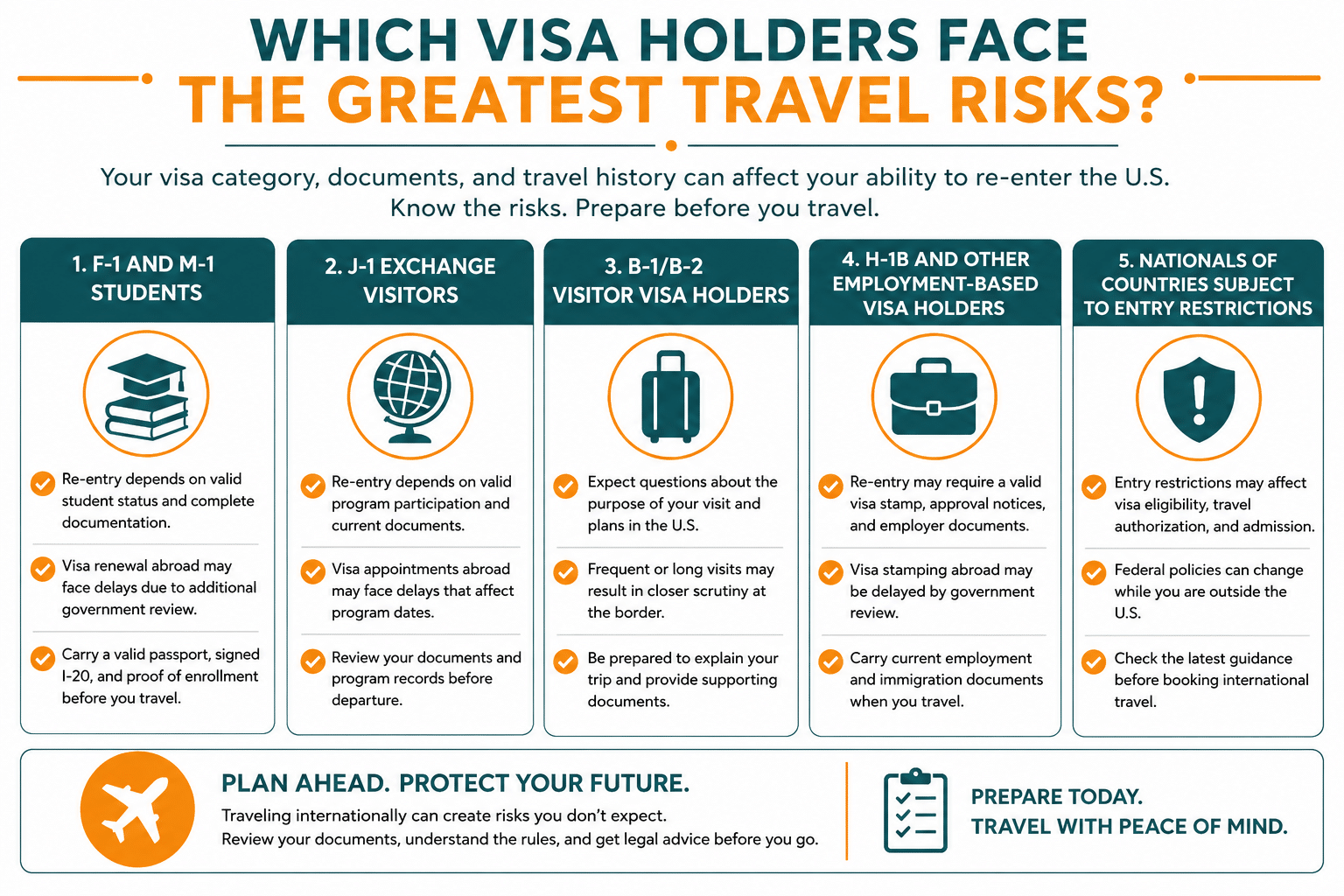
Which Visa Holders Have the Greatest Travel Risks?
Not all visa holders face the same level of risk when traveling internationally. Your immigration status, travel history, country of citizenship, and the documents you carry can all affect what happens when you attempt to return to the United States. Before booking a flight, it’s a good idea to determine how your visa category may affect re-entry.
F-1 and M-1 Students
If you’re studying in the United States and plan to go abroad, be sure to verify that your passport is valid, your Form I-20 contains a current travel signature, and your school records accurately reflect your enrollment status. A missing document or expired travel authorization can create unexpected problems at the airport.
If you need a new visa stamp, consular officers may request further documentation or place your application under government review before issuing a decision. If that review remains pending, you may be unable to return to classes as planned.
J-1 Exchange Visitors
Exchange visitors should review their program requirements before making international travel plans. Re-entry may depend on maintaining valid program participation and carrying updated documentation issued by the sponsoring organization. Family members traveling with J-2 status should also confirm that their records remain current.
Visa renewal appointments abroad can create difficulties for exchange visitors. Additional government review may delay visa issuance and extend the amount of time spent outside the United States. Those delays can interfere with program participation and scheduled return dates.
B-1/B-2 Visitor Visa Holders
Visitor visa holders should expect questions about the purpose of their travel and their plans in the United States. Customs and Border Protection officers may ask you about prior visits, employment, family connections, and the intended length of stay. The answers provided during inspection can influence an admission decision, so before traveling, make sure you can clearly explain the purpose of your visit and provide supporting documentation if requested.
Please note that frequent travel to the United States may result in scrutiny. In other words, immigration officers may examine your travel patterns to determine whether you’re complying with the terms of the visa.
H-1B and Other Employment-Based Visa Holders
Employment-based visa holders should confirm that all immigration and employment records remain current before traveling abroad. Re-entry may require a valid visa stamp, approval notices, and supporting documentation from an employer. Missing documents can create delays during travel or inspection.
Note: Some workers may need visa stamping at a U.S. consulate before returning to the United States. If a visa application is delayed during government review, returning to work on schedule may become difficult. This can affect employment obligations and travel plans.
Nationals of Countries Subject to Entry Restrictions
Foreign nationals from countries affected by Presidential Proclamation 10998 or other federal restrictions face additional concerns when traveling internationally. For them, visa eligibility, travel authorization, and admission requirements may differ from those applied to other travelers. Government policies can also change while a person is outside the United States, so if you’re from Burkina Faso, South Sudan, or another restricted country, speak to a lawyer.
Pro Tip: Before making travel arrangements, review the latest federal guidance and determine whether any restrictions apply to your nationality or visa classification. Waiting until shortly before departure can leave little time to address immigration concerns. A review of your travel plans before booking a flight can help identify potential problems before they arise.
Adjustment of Status Applicants May Encounter Further Risks
If you’ve filed an Adjustment of Status application and are waiting for a decision, international travel requires extra caution. Many applicants assume that filing Form I-485 gives them the freedom to leave the United States and return without consequences. In some situations, that assumption can create immigration problems.
Adjustment of Status allows certain individuals to apply for lawful permanent residence from inside the United States. While the application remains pending, federal immigration rules limit international travel, so leaving the country without the proper travel authorization can affect your pending application.
Leaving the United States Without Advance Parole
Advance Parole is a travel document that allows certain Adjustment of Status applicants to return to the United States after temporary travel abroad. For eligible parties, it can provide an opportunity to travel internationally without abandoning a pending application.
Many Adjustment of Status applicants need Advance Parole before traveling internationally. This means that departing the United States without valid travel authorization may result in U.S. Citizenship and Immigration Services treating the application as abandoned. If that happens, the applicant could encounter a major setback.
Not every immigration category follows the same rules. Some applicants may qualify for exceptions based on their immigration status, so before making travel arrangements, review your eligibility and travel authorization requirements with a Seattle immigration attorney.
Delays Outside the United States
Even when a traveler has valid travel authorization, returning to the United States is not always easy. Visa issuance delays, government review, airline boarding issues, and changing federal policies can affect return travel, making a short trip abroad become much longer than expected.
These delays can create problems for employment, school enrollment, family responsibilities, and pending immigration applications. Missing deadlines or appointments may create other immigration concerns. Before departing, consider how an extended stay abroad could affect your plans.
When Should You Speak With an Immigration Attorney Before Traveling?
As you can see, some travelers with nonimmigrant visas encounter more risks when leaving the United States and attempting to return. If any of the following situations apply to you, speaking with an immigration attorney before departure can help you identify potential re-entry concerns and avoid preventable problems.
- Pending Green Card Application: If you have filed Form I-485 and your application remains pending, international travel may affect your case. Before leaving the country, confirm that you have the travel authorization needed for your situation.
- Need For Advance Parole: If your ability to return to the United States depends on Advance Parole, review your travel documents before booking a flight. An attorney can help determine whether your authorization remains valid and whether other concerns should be addressed before departure.
- Expired Visa Stamp: An expired visa stamp may require you to obtain a new visa abroad before returning to the United States. Visa issuance delays and government review can affect how long you remain outside the country.
- Visa Renewal Abroad: If you plan to attend a visa interview outside the United States, you should understand the possibility of delays before making travel arrangements. A legal review can help you prepare for questions that may arise during the visa application stage.
- Country Subject To Entry Restrictions: Foreign nationals from countries affected by Presidential Proclamation 10998 or other federal restrictions run into travel concerns. Current rules can affect visa eligibility, travel authorization, and admission into the United States.
- Prior Immigration Violations: Previous overstays, unauthorized employment, removal proceedings, or other immigration issues may affect re-entry. An attorney can evaluate how your immigration history may affect international travel.
- Previous Secondary Inspection: If you have been referred to secondary inspection during a prior trip, additional preparation may be appropriate before traveling again. Reviewing your records in advance can help identify issues that may lead to further questioning.
International travel can present challenges even when you have valid immigration documents. Before leaving the United States, take time to evaluate any factors that could affect your return. Addressing concerns before departure is generally easier than trying to resolve them from outside the country.
Questions? Contact an Immigration Law Firm
International travel has become more difficult for many non-immigrant visa holders and Adjustment of Status applicants. Entry restrictions, government review, visa issuance delays, and inspection at the port of entry can all affect your ability to return to the United States. A valid visa or travel document doesn’t eliminate those risks.
If you’re planning international travel and have questions about re-entry, speak with an immigration attorney at ZafiroLaw before booking a flight. We can review your immigration history, travel authorization, and planned itinerary and help identify concerns before they affect your return. Getting answers before departure may also help you avoid unexpected delays and immigration complications while abroad. For more information or to schedule a no-obligation consultation, please call (206) 309-9645 now.